Blog
Agent event infrastructure, without the noise.
Short, practical writing on event layers, delivery channels, OpenClaw and Hermes setup, and making agents proactive without wasteful polling.

Real Hermes use cases are weird, personal, and hard to explain
The most durable personal-agent workflows are not generic demos. They are specific, local, recurring, and tied to a user's own tools.
8 min read · Updated 2026-06-02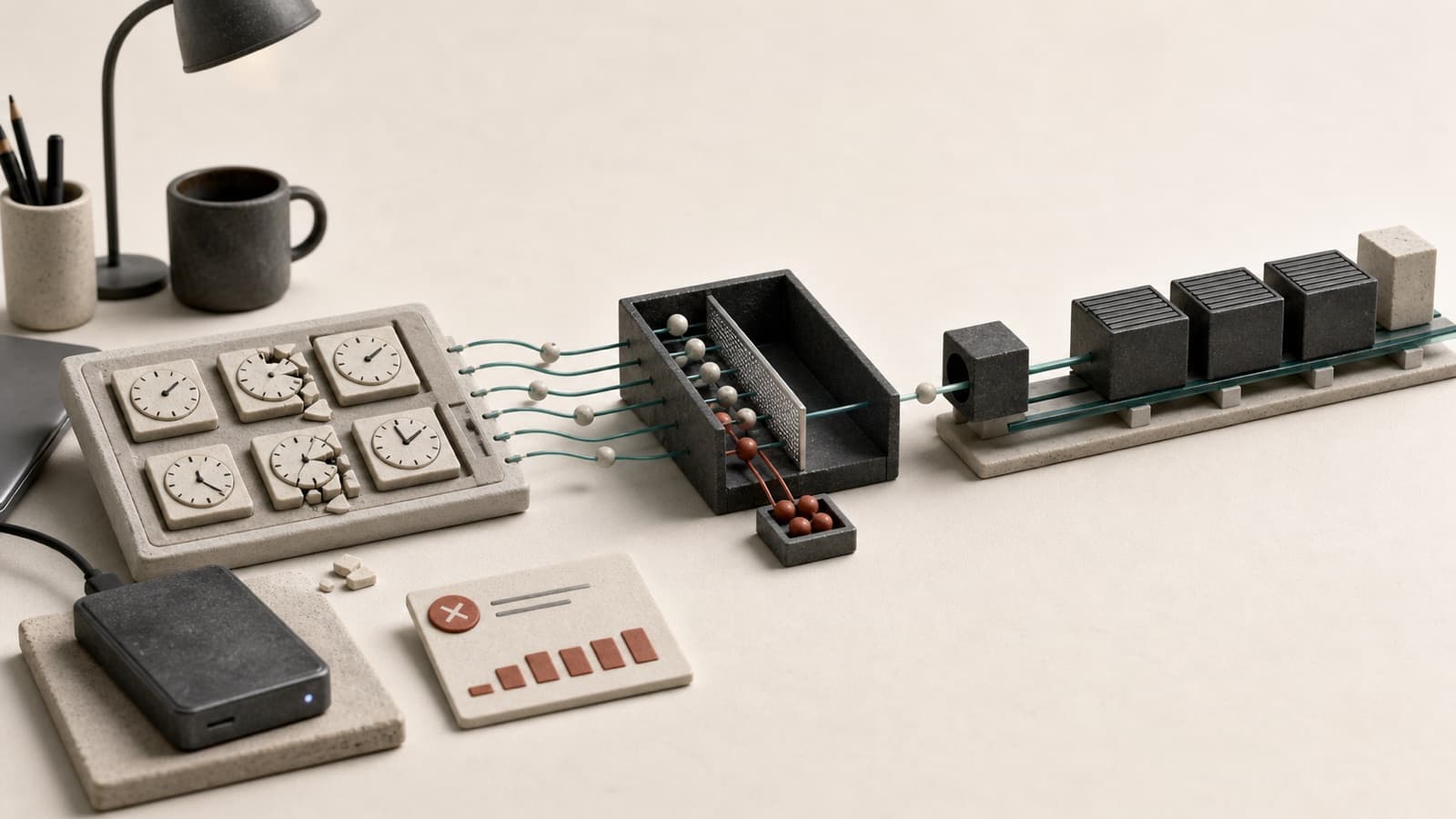
Cron jobs are becoming the first production incident for personal agents
Personal agent users are discovering reliability through cron failures, broken updates, backups, token spikes, and missed background runs.
8 min read · Updated 2026-05-31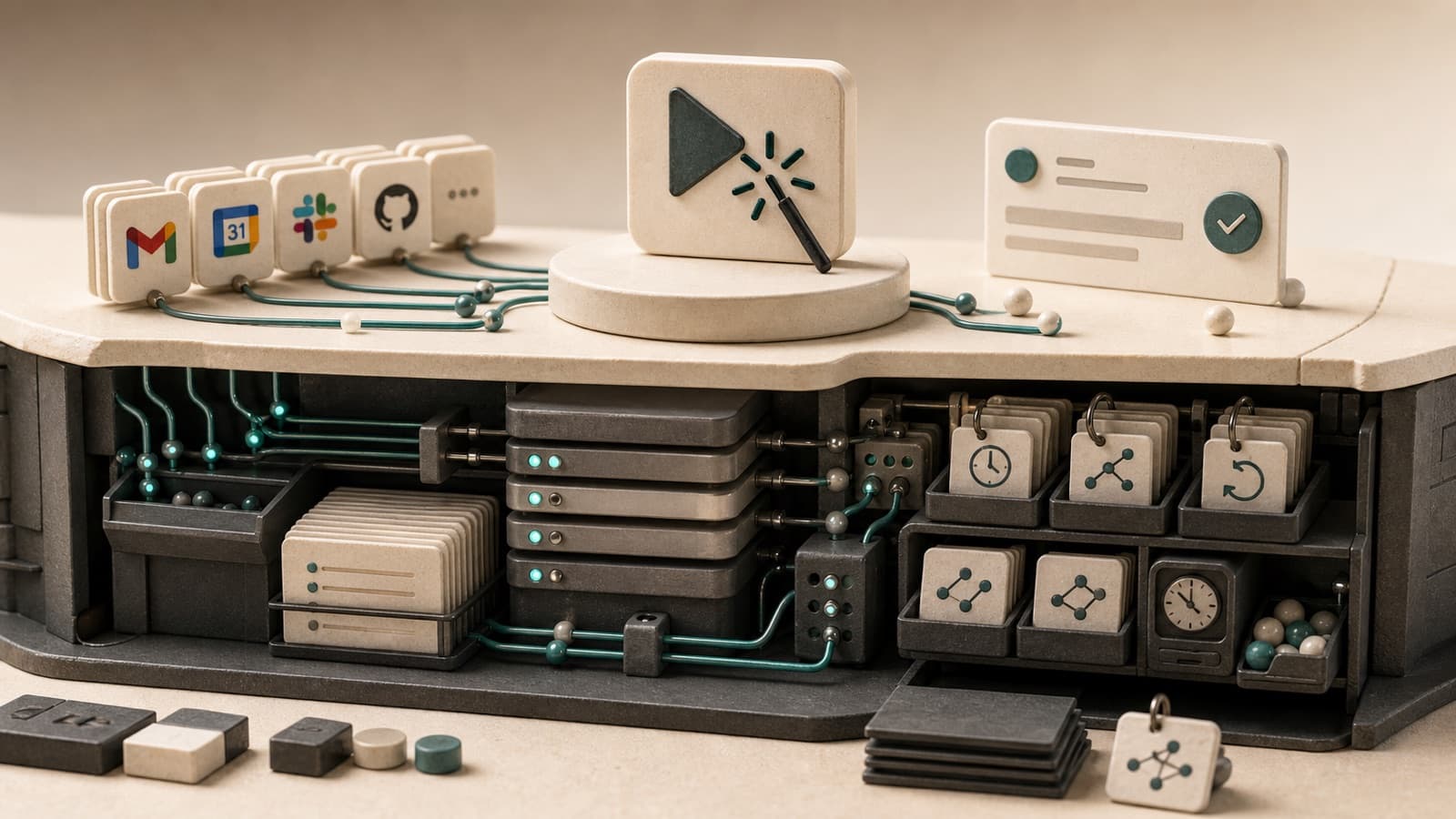
Agent demos hide the hard part: state
Production agent failures usually appear around state, handoff, memory, retries, vague inputs, and event boundaries rather than one-off model capability.
8 min read · Updated 2026-05-29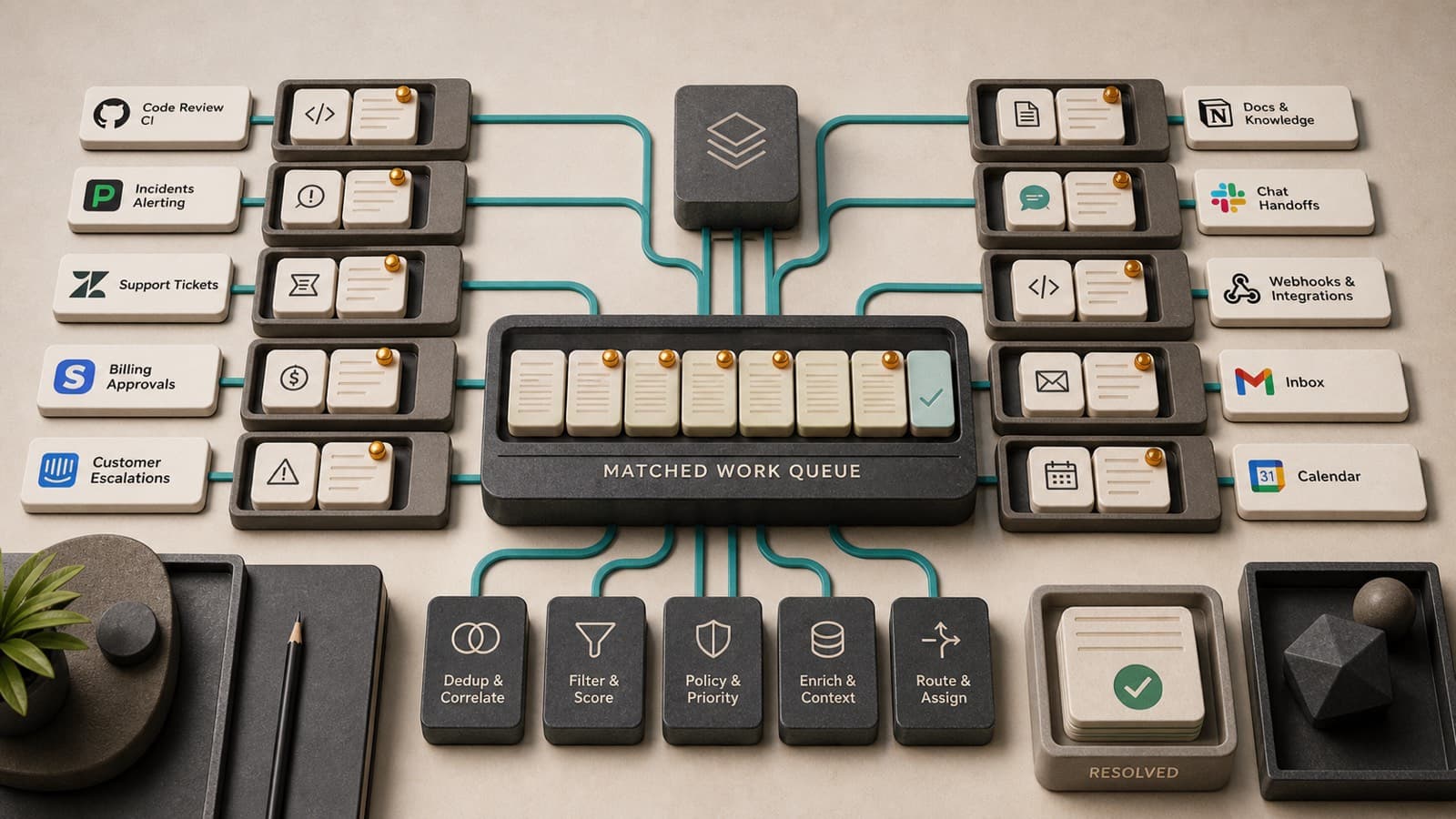
Boring agent workflows are the real ones
The most durable proactive-agent use cases are not cinematic. They are inbox, calendar, ticket, CI, billing, and escalation workflows with clear wakeup rules.
7 min read · Updated 2026-05-27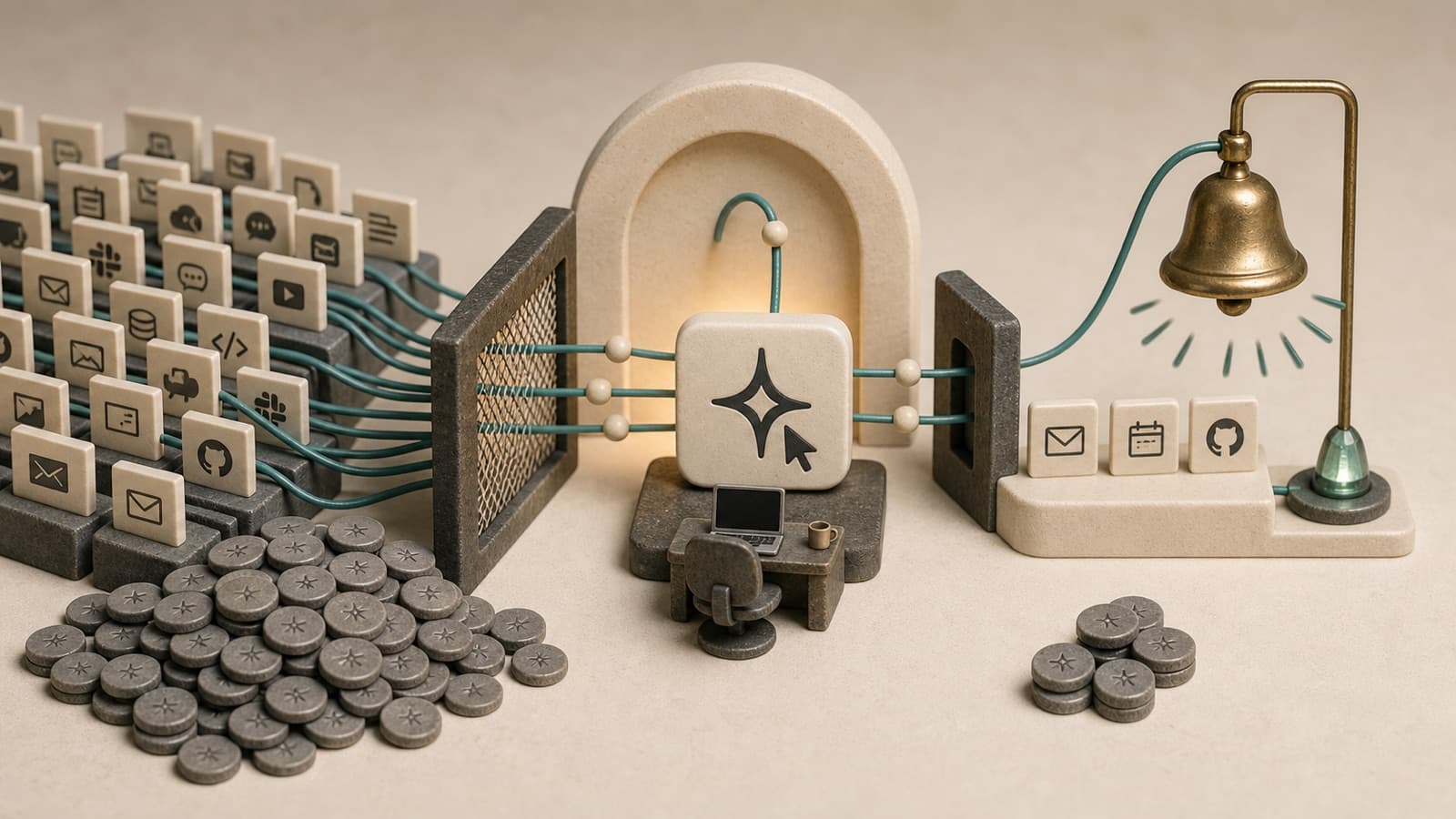
Your agent is not expensive. Your wakeup strategy is.
Token spikes in personal agents often come from broad wakeups, boot context, chat history, cron loops, and model depth applied to every branch.
8 min read · Updated 2026-05-27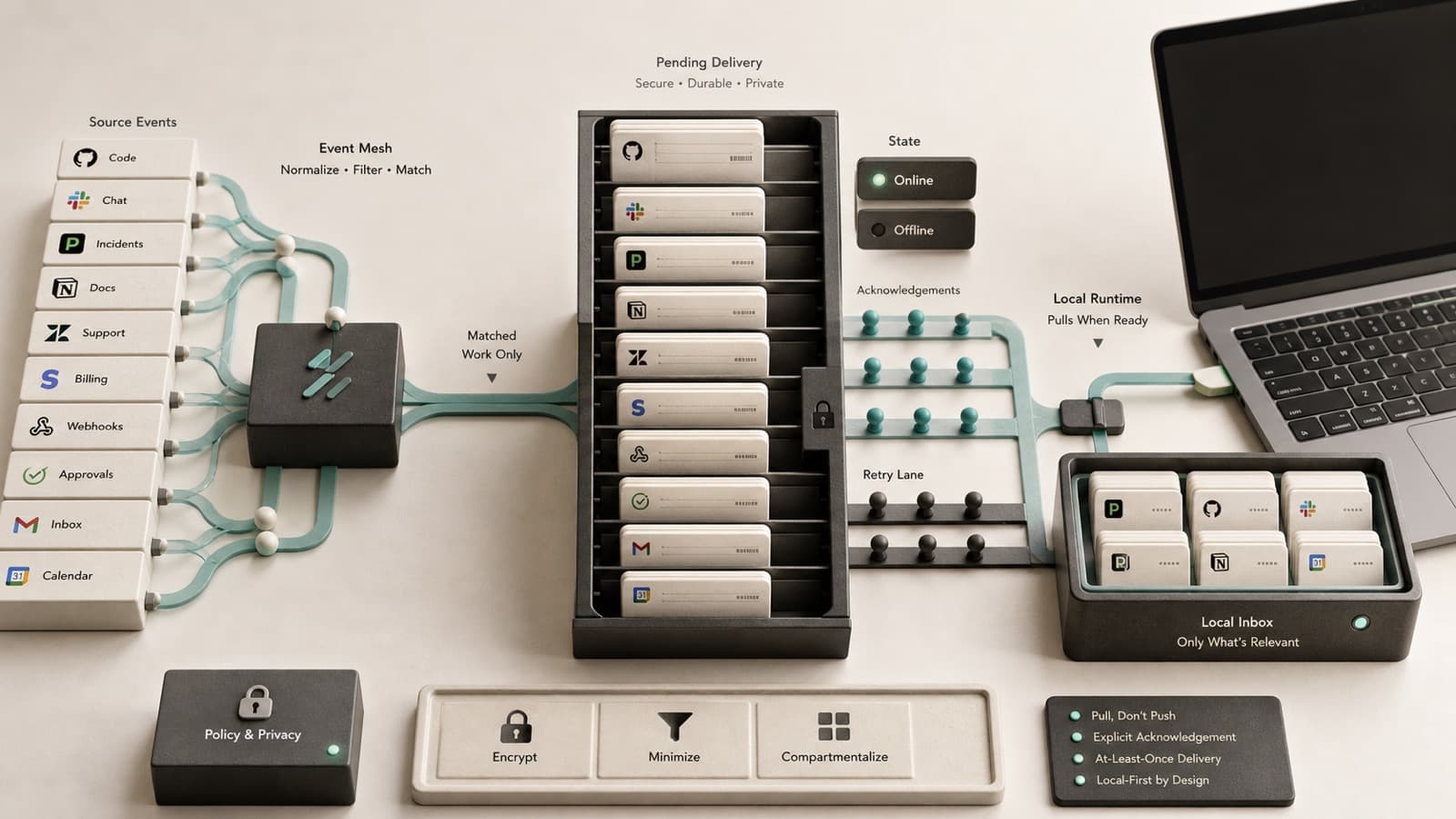
Local agents need pull delivery
Webhooks work cleanly for hosted services. Local agents need durable pending deliveries they can pull, acknowledge, and resume.
7 min read · Updated 2026-05-26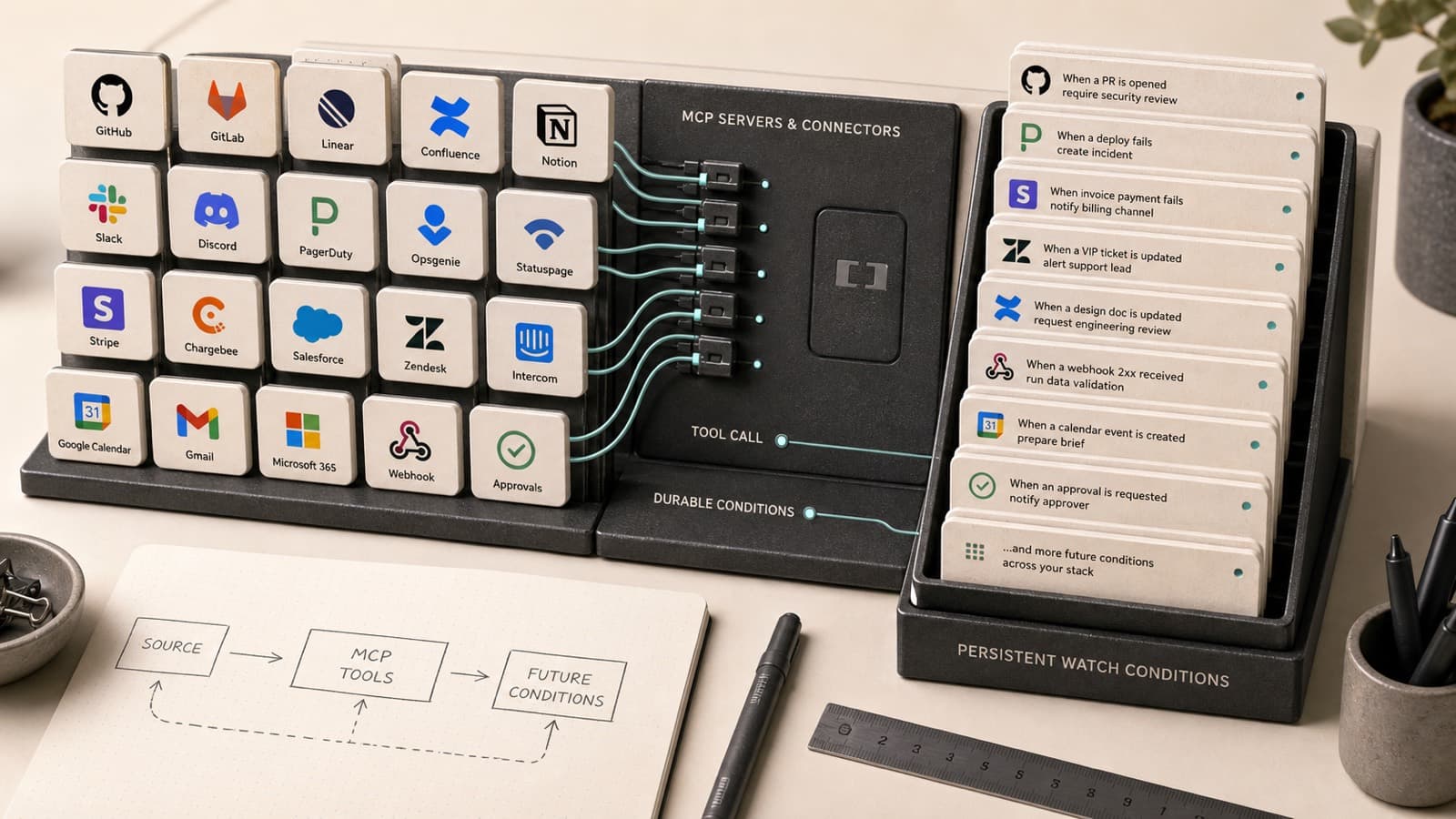
MCP servers should leave future conditions behind
MCP gives agents tools for the present turn. Proactive systems also need durable watches that survive after the chat is over.
7 min read · Updated 2026-05-25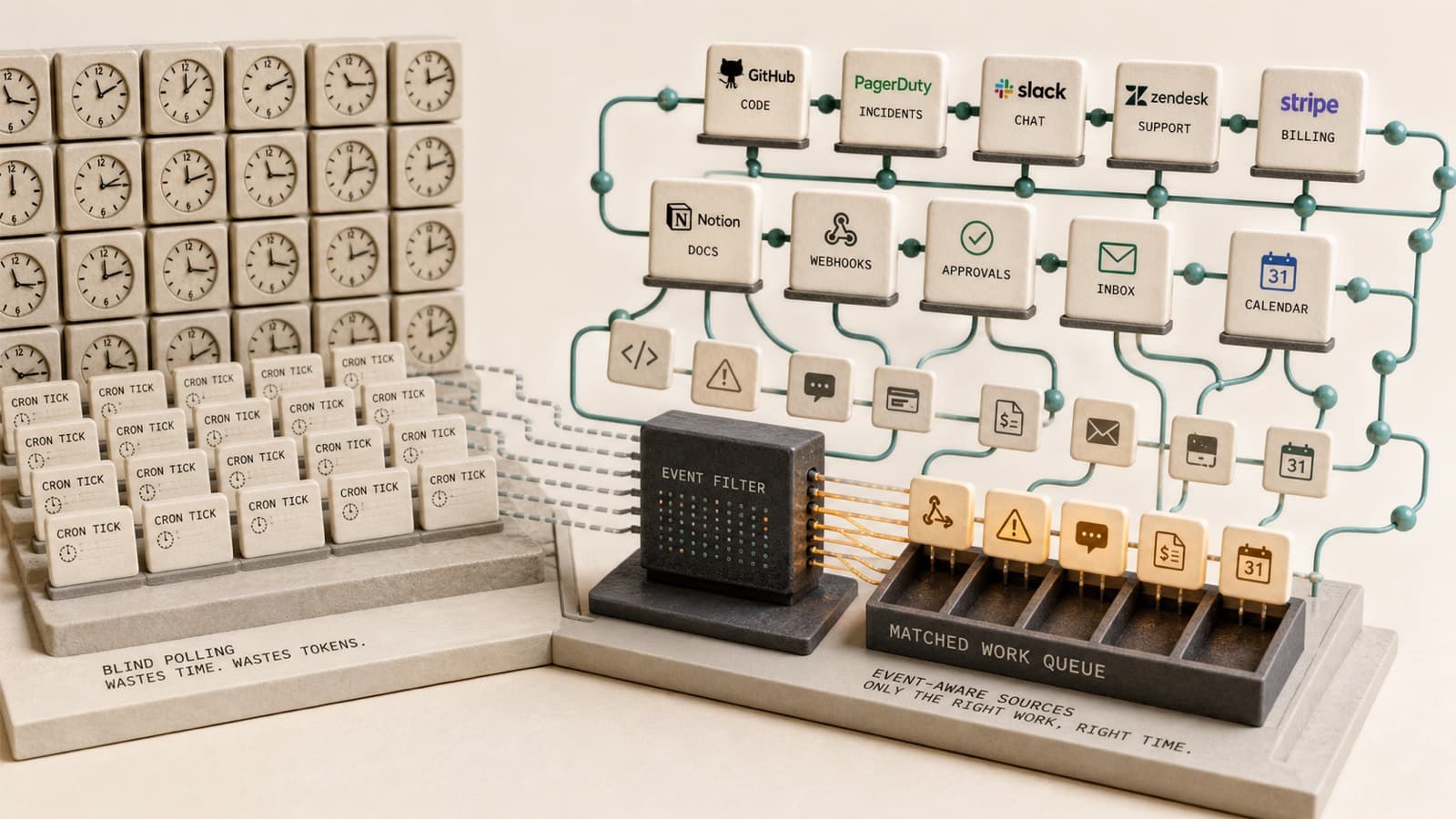
Cron is the wrong primitive for inbox and calendar watchers
Scheduled checks can ship a demo, but inbox and calendar assistants need event-aware wakeups with evidence and delivery semantics.
7 min read · Updated 2026-05-24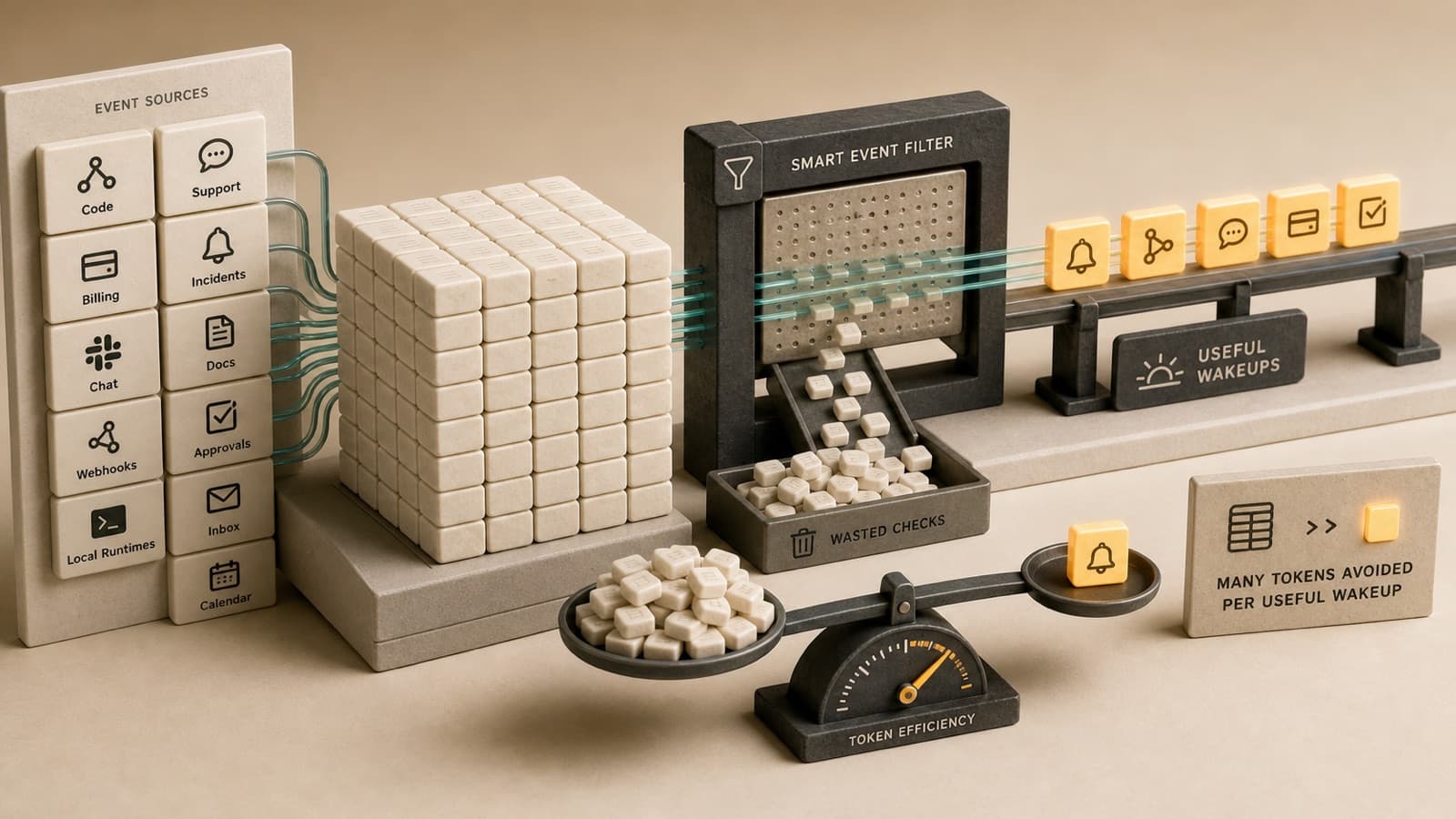
Tokens per useful wakeup
A benchmark snapshot for WatchBench Email v0 and why proactive-agent systems should measure useful interruptions, not only task success.
8 min read · Updated 2026-05-26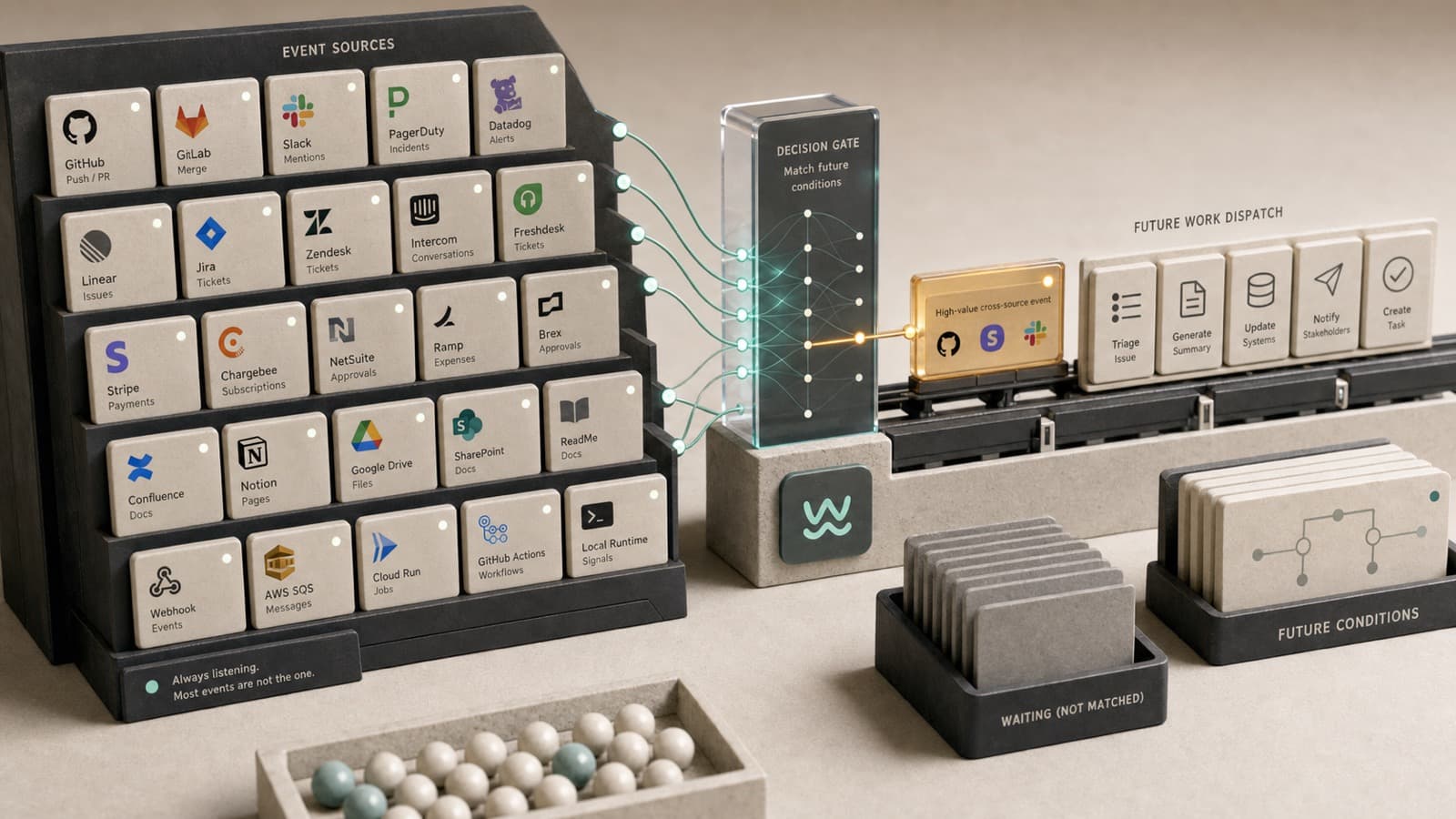
What wakes the agent?
The most important question for proactive agents is not what model they use. It is which event is allowed to interrupt them.
7 min read · Updated 2026-05-22
What agent builders are learning from OpenClaw, Hermes, Claude Code, and Codex
The 2026 assistant stack is converging on the same pain points: context cost, handoff, permissions, local delivery, and reliable interrupts.
8 min read · Updated 2026-05-14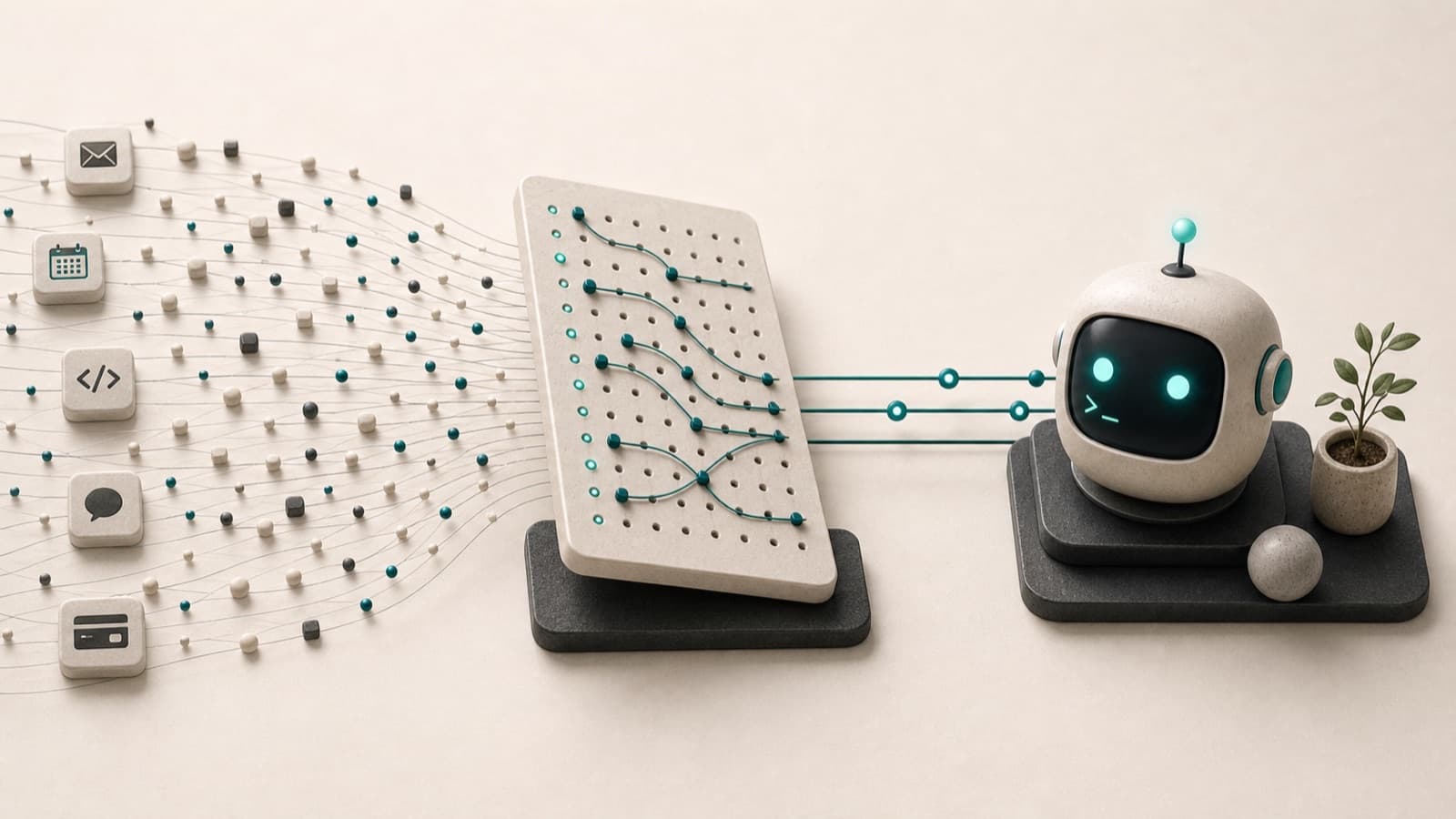
The event layer is becoming agent infrastructure
Why proactive agents need an event layer between raw app streams and expensive reasoning turns.
7 min read · Updated 2026-05-14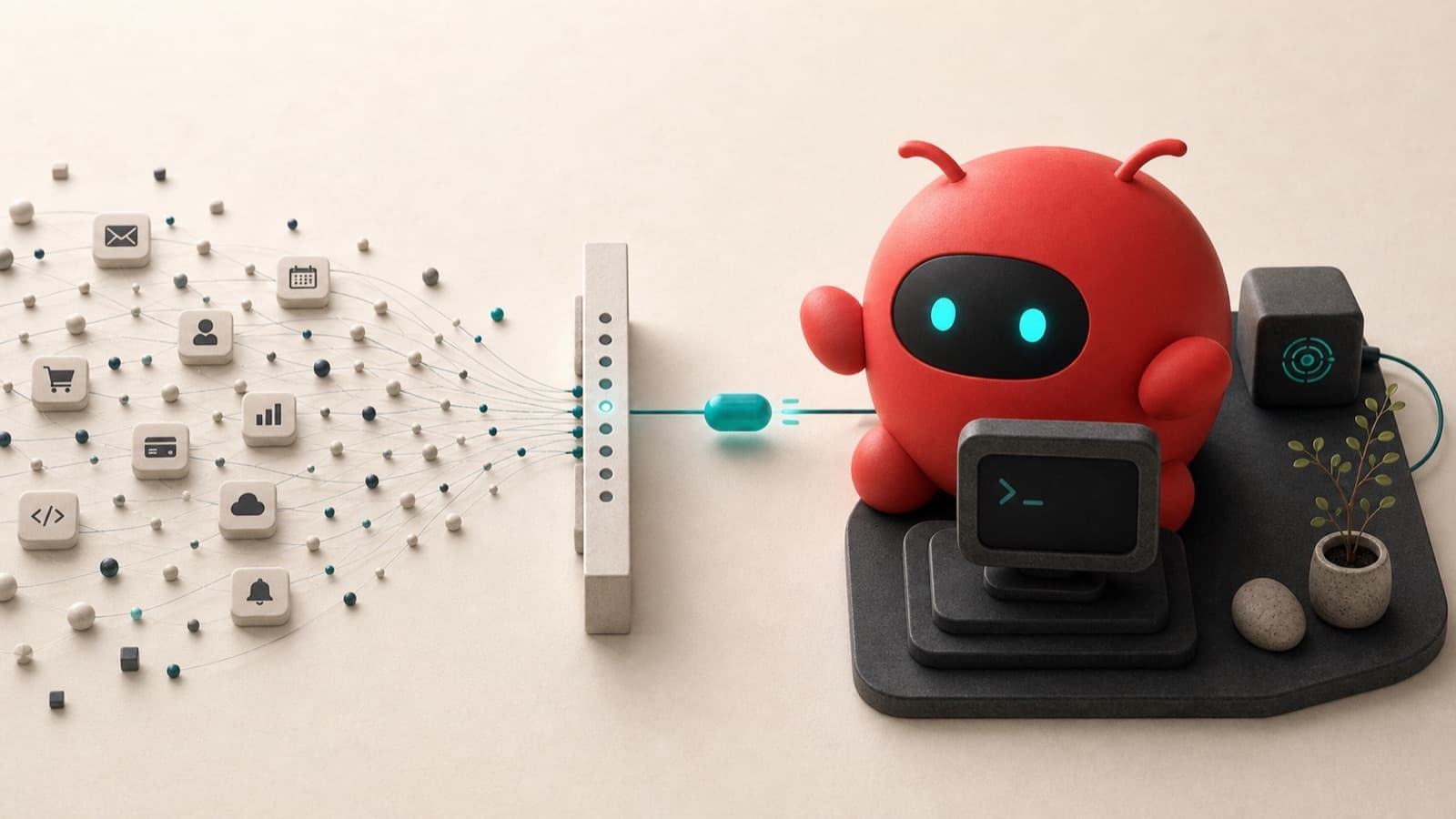
Local agents need interrupts, not bigger background loops
A broader view of why desktop and local agents need upstream event filtering before they can become truly useful.
6 min read · Updated 2026-05-14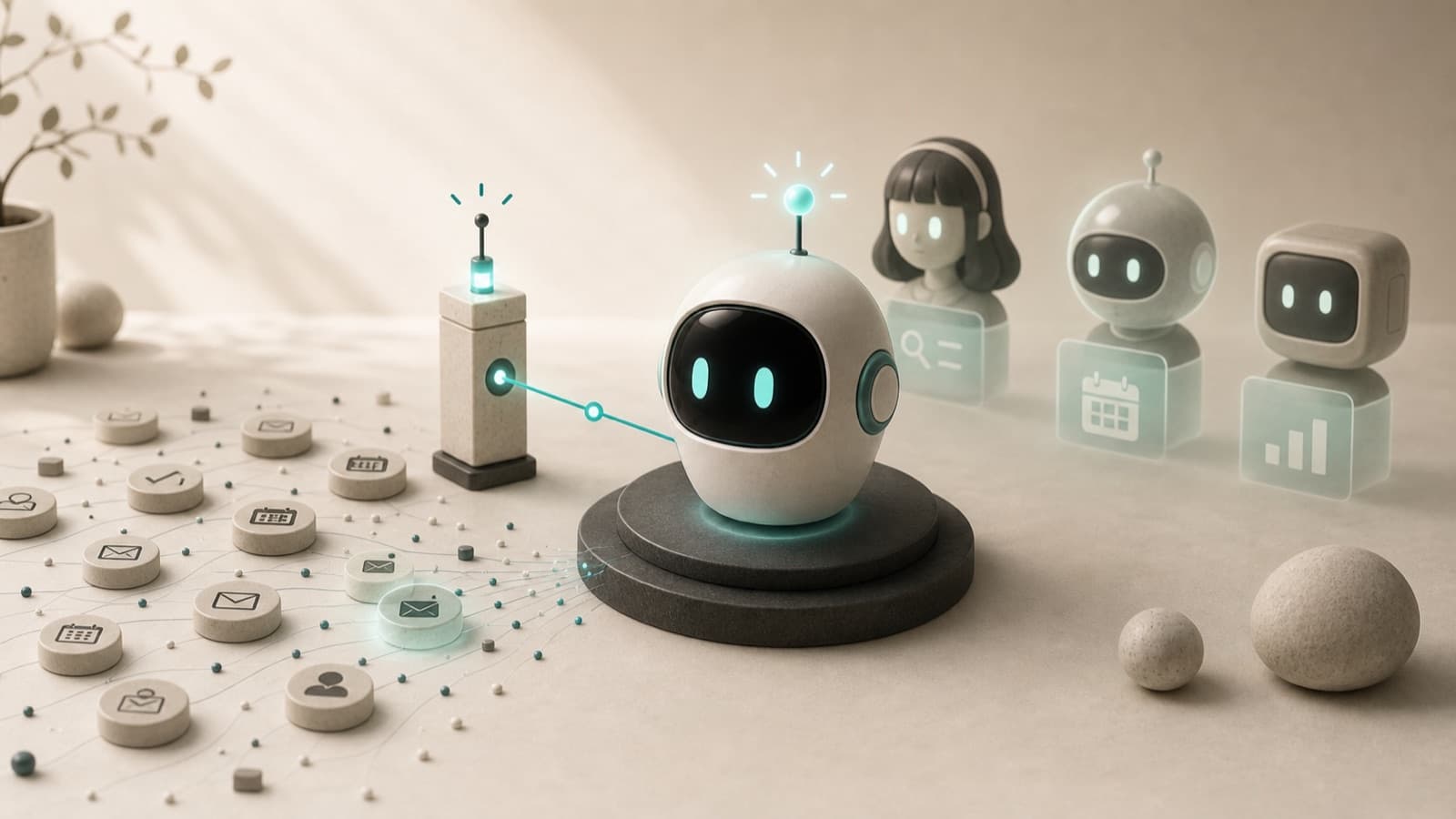
Proactive assistants need interrupt infrastructure
Why Pi, OpenClaw, Hermes, Claude Code, and Codex point toward event-driven assistant runtimes.
7 min read · Updated 2026-05-14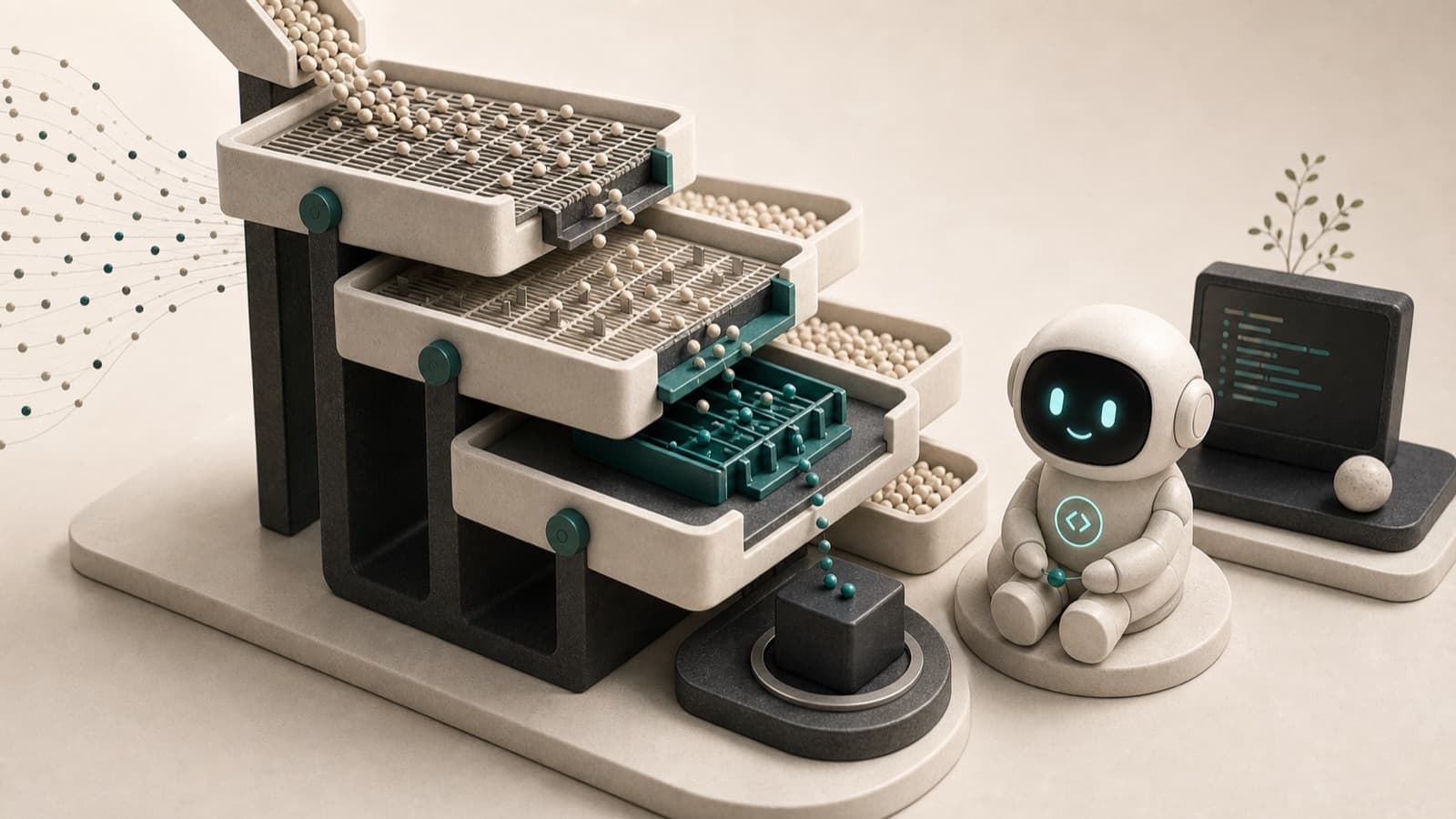
The cascade architecture for proactive agents
Why agent systems should filter events through cheap deterministic layers before spending large-model reasoning.
7 min read · Updated 2026-05-14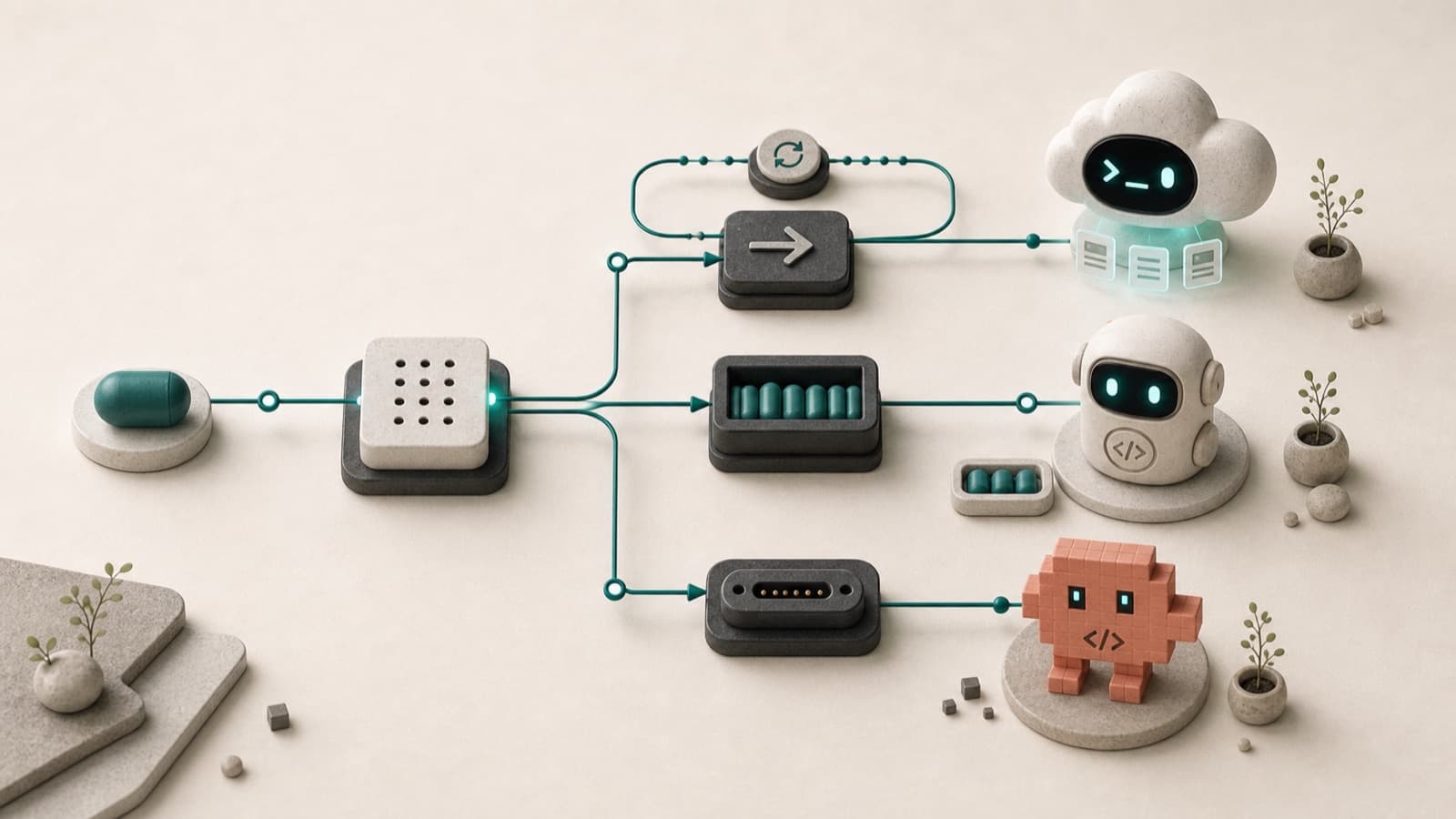
Agent events need delivery semantics
Why local agents, hosted agents, and MCP clients need different event delivery contracts.
6 min read · Updated 2026-05-14